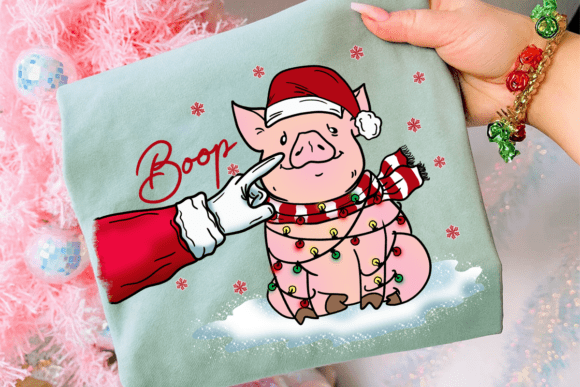
Reviewing the Boop Christmas Pig PNG for Embroidery
As a designer who spends half my life digitizing and the other half staring at stitch-outs under a magnifying glass, I have developed a keen eye for what translates well from screen to fabric. When I first pulled up the Boop Christmas Pig PNG, Cute Pig Lights, my initial reaction was one of cautious optimism. It is easy to find cute holiday graphics, but finding an illustration that holds its integrity when converted into thread is a different challenge entirely. This piece falls under the category of Illustrations, which often presents unique hurdles regarding detail retention and color blending in machine embroidery.
First Impressions and Visual Personality
The mood this design creates is undeniably warm and whimsical. The central figure—a pig adorned with festive lights—exudes a playful charm that feels modern rather than dated. For embroidery designers and craft business owners, the visual personality is crucial. You do not want a design that looks cluttered or chaotic once stitched. The layout here appears balanced, with the character’s shape providing a solid foundation for fill stitches while the lights offer opportunities for satin stitch accents or contrasting thread colors.
The level of detail is moderate, which is generally a good sign for versatility. Overly complex illustrations often result in muddy stitch-outs on textured fabrics, while overly simple ones can look cheap. This design seems to strike a balance, suggesting it could work well for both high-end boutique branding and casual handmade products. The "boop" element implies a softness, likely referring to the nose or the overall rounded aesthetic, which translates beautifully into plush items like baby blankets or pillow covers.
Real-World Application: The Holiday Tote Test
To truly evaluate the Boop Christmas Pig PNG, Cute Pig Lights, I mentally placed it on a canvas tote bag, a staple item for any Etsy seller during the holiday rush. Imagine a natural cotton canvas, sturdy and slightly textured. The pig design, centered on the front panel, would serve as a focal point. Because the design includes lights, there is an inherent opportunity for creative thread choices. Using metallic threads for the bulbs could add a subtle shimmer that catches the light, elevating the finished product from a simple bag to a standout gift item.
However, practical judgment is key. If you are using this for a sweatshirt embroidery project, the stretch of the fabric becomes a factor. A design with too much density can cause puckering. In this case, the open spaces around the pig and the linear nature of the lights suggest that with proper stabilizer usage, the design should sit flat on fleece or cotton blends. For small shop product lines, this versatility is a major asset. It allows you to offer the same design across multiple categories—apparel, home decor, and accessories—without needing to significantly alter the file for each application.
Navigating Fabric and Hoop Constraints
While the design is charming, there are areas where caution is necessary. If you are working with a small hoop size, such as a 4x4 inch hoop for embroidered patches or caps, you must check the scale carefully. Tiny details, especially if the lights are rendered with very fine lines, may get lost or break during stitching on curved surfaces like caps. The curvature of a baseball cap distorts the design slightly, so elements that are too close to the edge might not stitch out cleanly.
Dark fabric presents another consideration. If you plan to stitch this on a navy or black garment, the contrast of the thread colors becomes critical. The pig’s body color needs to stand out against the background, and the lights must be bright enough to be visible. I always recommend testing the design in a black-and-white mockup first to ensure the value contrast is sufficient. If the original illustration relies on subtle shading, you may need to adjust your thread palette to use higher-contrast colors for clarity.
Textured fabrics like terry cloth or heavy wool require a different approach. The stitch density of the fill areas must be robust enough to cover the fabric texture but not so dense that it creates a stiff, cardboard-like feel. For baby embroidery, softness is paramount. Therefore, using a lighter fill stitch or ensuring the underlay is properly configured is essential to maintain the comfort of the final item.
Enhancing Brand Value and Customer Trust
For commercial embroidery projects, the quality of the design directly impacts perceived value. A clean, well-executed stitch-out builds customer trust. When a buyer sees a Boop Christmas Pig PNG, Cute Pig Lights design that is crisp, with no loose threads or distorted shapes, they associate that quality with your brand. This is particularly important for personalized gifts and custom apparel, where customers expect a premium finish.
Using this design in your printable mockup portfolio can also boost engagement. Digital embroidery files and finished product previews that showcase the design in realistic settings help buyers visualize the end result. For digital product sellers, offering this as part of a bundle with complementary holiday elements can increase average order value. However, always confirm licensing before selling finished items or digital products. Just because a file is available does not mean it is cleared for commercial use without restrictions.
Practical Designer Notes for Execution
Before committing to a full production run, follow these steps to ensure success:
- Test on Scrap Fabric: Always stitch out a sample on the exact fabric type you intend to use. This reveals issues with tension, density, or thread breaks.
- Check Thread Color Contrast: Ensure the colors chosen for the pig and the lights provide enough distinction from the background fabric.
- Review Stitch Density: If the design feels too stiff after stitching, consider reducing the fill density in your digitizing software if you have access to the source file, or choose a lighter stabilizer.
- Confirm Hoop Size: Measure the design dimensions against your machine’s hoop capabilities. Do not attempt to squeeze a large design into a small hoop by resizing it disproportionately.
- Inspect Small Details: Zoom in on the lights and facial features. Ensure they are large enough to be stitched reliably without breaking needles or threads.
- Use Proper Stabilizer: Match the stabilizer to the fabric. Cut-away stabilizer is often best for stretchy fabrics like sweatshirts, while tear-away may suffice for stable cottons.
In conclusion, the Boop Christmas Pig PNG, Cute Pig Lights offers a delightful blend of charm and practicality for the right projects. It fits naturally into the world of holiday embroidery, appealing to those who appreciate whimsical, high-quality handmade products. By paying attention to fabric choice, stabilizer selection, and thread contrast, you can transform this illustration into a stunning finished product that delights customers and enhances your craft business reputation. Whether for a cozy baby item or a festive tote bag, this design has the potential to shine, provided it is handled with the care and technical insight it deserves.