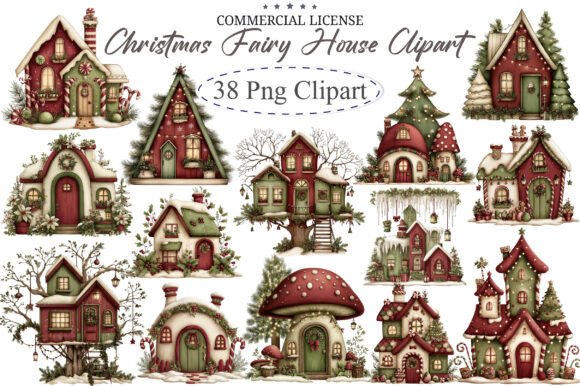
Whimsical Christmas Fairy House Clipart Review
As a brand designer and content marketer, I approach every graphic design asset with a critical eye. It is not just about aesthetics; it is about communication, audience perception, and commercial viability. Recently, I evaluated the Whimsical Christmas Fairy House Clipart for a hypothetical seasonal campaign targeting handmade gift sellers and lifestyle bloggers. This review breaks down how this specific set of Illustrations performs in real-world marketing scenarios, from social media graphics to packaging design.
First Impressions and Emotional Tone
The immediate impact of the Whimsical Christmas Fairy House Clipart is one of warmth and nostalgia. The design language leans heavily into storybook charm, utilizing soft curves, intricate details, and a magical atmosphere that instantly captures attention. For brands operating in the handmade, artisanal, or family-oriented niches, this mood is invaluable. It creates an emotional connection before the viewer even reads the copy.
However, tone matters. This asset does not scream "corporate efficiency." Instead, it whispers "cozy evening by the fire." This makes it ideal for casual branding, holiday promotions, and content that aims to slow down the scroll. If your brand identity relies on minimalism or stark modernism, these Illustrations might feel too busy. But for those looking to add a layer of enchantment to their marketing visuals, this clipart delivers a strong first impression.
Strategic Applications in Branding and Marketing
In my testing, I integrated the Whimsical Christmas Fairy House Clipart into various touchpoints to see where it added value versus where it created clutter. Here is how it performs across different channels:
- Social Media Graphics: The detailed nature of the fairy houses works exceptionally well on Pinterest pins and Instagram carousels. When used as a central focal point, it encourages saves and shares, boosting engagement metrics.
- Packaging Design and Product Labels: For small business owners selling candles, soaps, or baked goods, this clipart serves as a charming accent on product labels. It elevates the perceived value of the item, making it feel like a special gift rather than a commodity.
- Email Banners and Headers: Using the asset in email marketing headers can significantly improve open rates during the holiday season. It signals a festive update without being overly aggressive.
- Printable Design and Lead Magnets: As a digital product component, these images are perfect for creating downloadable coloring pages or holiday checklists, which are excellent tools for building email lists.
The versatility of this design bundle allows it to function as both a primary hero graphic and a subtle decorative element. Whether you are designing a Facebook ad or a website header, the key is balance.
Supporting Marketing Goals Through Visual Hierarchy
A common mistake in content marketing is using decorative elements that distract from the call to action. The Whimsical Christmas Fairy House Clipart supports marketing goals by enhancing visual hierarchy when used correctly. By placing the illustration off-center or using it as a background watermark with reduced opacity, you can guide the eye toward your text while maintaining a professional appearance.
This approach builds audience trust. Consistent use of high-quality clipart signals that a brand cares about its presentation. It reinforces small business branding by creating a recognizable visual style that customers begin to associate with quality and care. Furthermore, it aids in stronger recognition; when followers see that specific whimsical style, they immediately know who the content is from.
Where to Use It and Where to Exercise Caution
While this asset is powerful, it is not a one-size-fits-all solution. It works best in:
- Hero graphics for blog posts about holiday traditions.
- Campaign headers for seasonal sales.
- Branded templates for Canva users who want a unique look.
- Decorative brand elements on merchandise like stickers and tote bags.
Conversely, use the Whimsical Christmas Fairy House Clipart carefully in:
- Formal corporate branding: It may undermine authority in serious industries like finance or law.
- Dense information layouts: The intricate details can compete with small text, reducing readability.
- Small mobile graphics: Ensure the PNG or SVG design is scaled appropriately so details do not become muddy on smaller screens.
- Text-heavy ads: If the message is complex, let the text breathe. Do not let the illustration overpower the core offer.
Practical Brand Designer Notes
Before integrating this graphic design asset into your next project, consider these technical and aesthetic checks. First, test the clipart against your existing brand color palette. While the original colors are charming, ensure they do not clash with your primary brand hues. If necessary, use editing software to adjust saturation or hue to maintain brand identity consistency.
Second, check black and white usage. A strong illustration should hold up even without color. Print a test version to see if the lines remain clear. Third, place the asset inside real campaign mockups. Preview it on mobile screens to confirm that the whimsical details are still visible and appealing at smaller sizes.
Typography pairing is crucial. This style pairs beautifully with serif fonts for a classic feel, script fonts for elegance, or handwritten fonts for a personal touch. Avoid overly rigid sans serif fonts unless you are aiming for a deliberate contrast. Finally, always review spacing and balance. Ensure there is enough negative space around the fairy house to let it shine.
Most importantly, confirm the commercial license terms. If you are using this for client work, paid campaigns, or products for sale, you must ensure the creative marketplace source grants full commercial rights. This protects your business and ensures your professional branding remains legally sound.
In conclusion, the Whimsical Christmas Fairy House Clipart is a potent tool for creators looking to inject magic into their digital ads and editorial design. When used with strategic intent, it transforms standard marketing visuals into memorable experiences that resonate with audiences seeking warmth and wonder during the holiday season.